Table Of Content
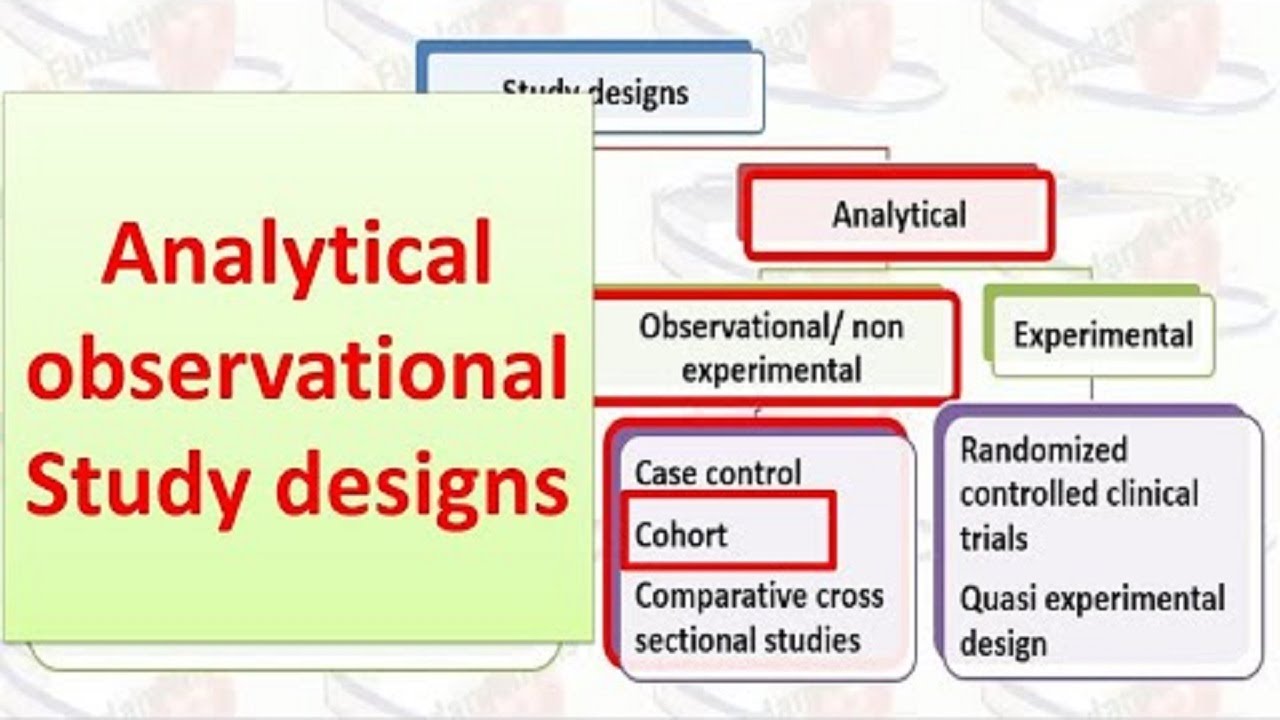
If this number is less than 1 (roughly, less than 0.9), the group with the exposure is less likely to have the disease than the group without the exposure. Observational studies can be subdivided into cohort, case–control, cross-sectional and ecological studies. Epidemiological studies have two basic approaches, the interventional and observational. Clinicians are more familiar with interventional research, whereas epidemiologists usually perform observational research. Prospective Studies - Observation of a population for a sufficient number of persons over a sufficient number of years to generate incidence or mortality rates subsequent to the selection of the study group. Case Control Studies - Studies which start with the identification of persons with a disease of interest and a control (comparison, referent) group without the disease.
What Is a Descriptive Study?
Taking this information, we move into Step 3 and create a working case definition. Using our case definition, we identify the individual cases, controls, and possible/suspected cases. An outbreak is the occurrence of disease in an area at a level exceeding the normally expected number of cases.
Randomized Controlled Studies
Randomization leads to equal distribution of known and unknown confounders between treatment arms; therefore, we can be reasonably certain that any difference in outcome is a treatment effect and not due to other factors. It is possible to determine risk of the outcome in each treatment arm accurately. However, randomized controlled trials have their limitations and may not be possible in every situation. For example, it is unethical to randomize participants to an intervention that is likely to cause harm—e.g., smoking. The terms “prospective” and “retrospective” refer to the timing of the research in relation to the development of the outcome.
10 Quick review questions
If we do make these incorrect assumptions, we have just been guilty of the ecological fallacy. We need to do a better job being correct in our inferences, or the meaning we assign to the data that we see. It would be a fallacy to assume that people from the southern United States will experience heat illness based on the presentation of data. Although RCTs are considered ‘gold standard’ in research, their status is at crossroads today.
Power and optimal study design in iPSC-based brain disease modelling Molecular Psychiatry - Nature.com
Power and optimal study design in iPSC-based brain disease modelling Molecular Psychiatry.
Posted: Wed, 16 Nov 2022 08:00:00 GMT [source]
Having worked through all of these potential research designs, you’d be forgiven for feeling a little overwhelmed and wondering, “But how do I decide which research design to use? While we could write an entire post covering that alone, here are a few factors to consider that will help you choose a suitable research design for your study. As you can see, grounded theory is ideally suited to studies where the research aims involve theory generation, especially in under-researched areas. Keep in mind though that this type of research design can be quite time-intensive, given the need for multiple rounds of data collection and analysis. As an example, let’s assume your research aims involved understanding how people cope with chronic pain from a specific medical condition, with a view to developing a theory around this. In this case, grounded theory design would allow you to explore this concept thoroughly without preconceptions about what coping mechanisms might exist.

Since clinical trials can be divided into two categories – pragmatic and explanatory trials, we should focus on pragmatic trials (Tosh et al., 2011). Pragmatic trials are used to assess the effectiveness of medical interventions in real-life practices. On the other hand, explanatory trials test the effectiveness of an intervention under optimal conditions.
CLASSIFICATION OF STUDY DESIGNS
The collected data would then provide insight regarding how widespread the issue may be – in other words, it would describe the situation. Longitudinal research design is used to study changes in a particular phenomenon over time. It involves collecting data at multiple time points and analyzing the changes that occur. The aim of longitudinal research is to provide insights into the development, growth, or decline of a particular phenomenon over time. Quasi-experimental research design is similar to experimental research design, but it lacks one or more of the features of a true experiment.
Systematic Reviews
Each study design has their own inherent strengths and weaknesses, and there can be a general hierarchy in study designs, however, any hierarchy cannot be applied uniformly across study design types (3,5,6,9). The measure of exposure in epidemiologic studies may be tobacco use (“Yes” vs. “No”) to define the two groups and may be the treatment (Active drug vs. placebo) in interventional studies. Health outcome(s) can be the development of a disease or symptom (e.g. lung cancer) or curing a disease or symptom (e.g. reduction of pain). Descriptive studies, which are not epidemiological or interventional, lack one or more of these elements and have limited application. High quality epidemiological and interventional studies contain detailed information on the design, execution and interpretation of results, with methodology clearly written and able to be reproduced by other researchers. Thus, case‐control studies can also be hypothesis testing studies and therefore can suggest a causal relationship but cannot prove.
Institutional Review Board – Application Sample...
Basketball players are at risk for ACL injury due to the movements they make during play. A study was conducted by Omi et al.[14] to identify the effectiveness of an intervention that aimed to alter risk factors like landing mechanics, muscular strength, postural control, and hip joint control. The only measure of association that can be calculated in a case-control study is the odds ratio (OR) [the probability of being exposed among cases compared to the probability of being exposed among controls]. Examples of the measures of association are the odds ratio and the relative risk.
These are observational studies often used to measure the prevalence and incidence of disease, particularly when the disease is rare, and are quite easy to conduct. An example of such a study would be to compare the prevalence of rheumatoid arthritis in Delhi and Manipur. This data is usually extracted from large databases which may have been used for other purposes and thus are not always reliable. Ecological studies are generally economical and serve as a preliminary point for hypothesis generation [2].
However, these differences will need to be accounted during analysis of results. They are used when cases and controls are selected based on matching personal characteristics (like gender). This way vital confounders, such as gender and age, can be eliminated, and as a result, researchers can focus on other exposure factors related to a certain disease. This approach is highly important to determine prognostic factors, which may go unnoticed in the random selection and small studies. Open trials or open-label trials are study designs in which both researchers and subjects know which treatment the subject receives. In non-randomized clinical trials, the researcher or the participants themselves decide the group of allocation.


No comments:
Post a Comment